
For a long time, information was the product.
If you knew something other people didn’t know, you could package it, sell it, and build a business around it. The internet made that easier than it had ever been. Everywhere you looked, someone was selling a course, a program, a download, a playbook, a blueprint, or a secret system.
Some of it was valuable. Some of it was nonsense. A lot of it lived somewhere in between.
But the basic premise was the same. I know something you don’t know. Pay me, and I’ll tell you.
That worked for a while because access was limited. If you wanted specialized knowledge, you had to find the right book, attend the right seminar, hire the right expert, or enroll in the right program. Information had scarcity value.
That world is gone.
Open your AI platform of choice and ask a decent question. In seconds, you can get a summary, a strategy, a framework, a checklist, a comparison, a plan, a draft, or a set of next steps.
It won’t always be perfect. It will need to be checked. It will still require human judgment. But the larger point is clear. Information is no longer scarce.
It’s everywhere. It’s cheap. Much of it is free. It’s available at any hour of the day or night from almost anywhere on earth.
The Information Age is dead.
What’s replacing it is something far more interesting.
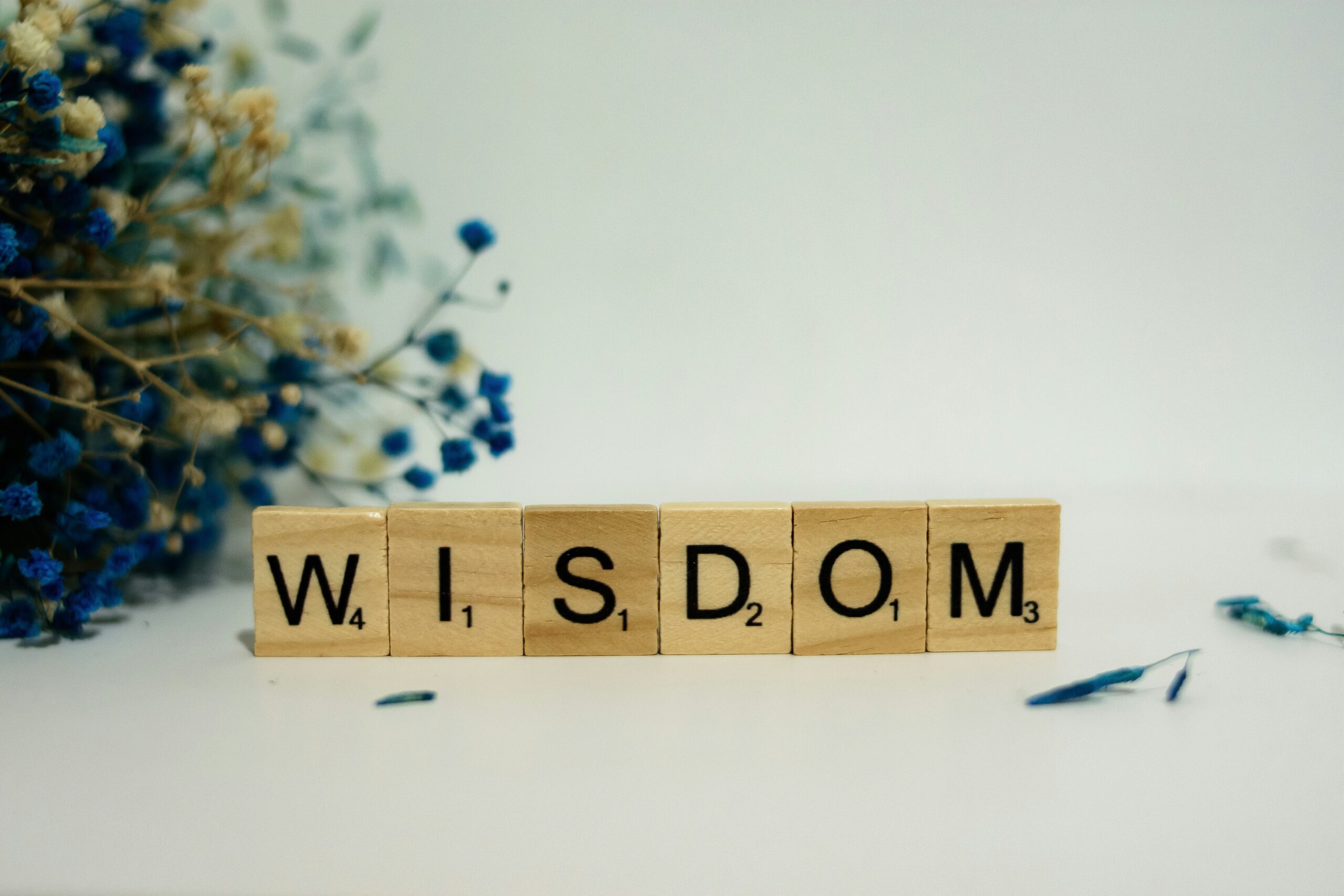
The Wisdom Age.
That’s where the real opportunity is now. Not in knowing more. Not in stuffing another course into an already overcrowded marketplace. Not in shouting louder about your proprietary framework.
The opportunity is in helping people make sense of the flood.
Because the problem today isn’t lack of information. The problem is overwhelm.
We have more data than we can process, more opinions than we can evaluate, more options than we can choose from, and more noise than we can metabolize. In the middle of all that noise, people are still trying to build businesses, lead teams, raise families, manage money, make career decisions, protect their health, guard their time, and create lives that actually feel worth living.
That doesn’t require more information.
It requires wisdom.
Wisdom is different from information. Information tells you what’s possible. Wisdom helps you know what’s appropriate.
Information gives you options. Wisdom helps you choose.
Information can tell you how to do something. Wisdom helps you decide whether it’s worth doing at all.
That’s the shift.
The person who thrives in this new economy won’t be the one who simply knows the most. It will be the one who can help others see clearly.
I’ve been thinking about this a lot because I work with coaches, consultants, authors, business owners, and mid-career professionals who are trying to figure out what comes next. Some are worried that AI will make them irrelevant. Some are wondering whether their expertise still matters.
I think their expertise matters more than ever, but only if it matures into wisdom.
If all you have is information, you’re in trouble. AI can probably organize it faster, cheaper, and more comprehensively than you can.
But if you have judgment, lived experience, discernment, empathy, pattern recognition, and the ability to guide another human being through complexity, you’re not obsolete. You’re needed.
The future belongs to the wisdompreneur.
The wisdompreneur doesn’t merely sell what they know. They help people understand what matters. They don’t just provide content. They provide context. They don’t just offer answers. They help people ask better questions.
And that’s rare.
It’s rare because wisdom can’t be downloaded. It can’t be scraped from the internet. It can’t be mass-produced by a machine in a few seconds.
Wisdom is earned.
It comes from paying attention. It comes from making mistakes and learning from them. It comes from years of experience, deep reflection, careful listening, and the courage to tell the truth when the truth is inconvenient.
It comes from knowing that the right answer on paper may be the wrong answer for this person, in this season, under these circumstances.
That’s what AI can’t fully do.
It can give you a plan, but it can’t know your soul. It can generate possibilities, but it can’t sit across from you, sense your fear, hear what you’re not saying, and help you find your way back to yourself.
That’s the human work. And it’s going to become more valuable, not less.
So if you’re a coach, consultant, author, speaker, advisor, or business professional, this is a moment to pay attention. The marketplace is changing. The old model of selling information is weakening.
But the need for wise guidance is growing.
People don’t need another pile of content. They need help discerning what to do with the content they already have. They need help seeing the tradeoffs, choosing the path, slowing down long enough to make a better decision, and turning information into meaningful action.
That’s the business opportunity.
But it’s also more than that. It’s a calling.
The Wisdom Age will reward people who have done their own work. It will reward people who have lived, failed, reflected, grown, and come back with something useful to offer.
It will reward people who can stand in the midst of all the noise and say, “Here’s what I’m seeing. Here’s what matters. Here’s what I’d pay attention to. Here’s what I’d let go.”
That’s not just information. That’s guidance. And guidance is becoming one of the rarest and most valuable gifts in the marketplace.
The Information Age is dead, but that doesn’t mean opportunity is dead. It means the easy game is over, and the deeper, more human game is just beginning.
Need help? Let’s talk. Email me: [email protected]